How to Make Money with Affiliate SEO: A Realistic Roadmap for Passive Income
Affiliate marketing has been around for decades, but the way people make money with affiliate SEO has shifted dramatically. It is no longer about throwing up a handful of thin product pages and hoping for the best. The landscape now demands real strategy, consistent work, and a willingness to learn from both data and the community. I have been on both sides of this equation - as a hobbyist who burned through several niche sites and as a consultant who helped others turn their side projects into actual income streams. The difference between those two outcomes often comes down to a few core practices that anyone can learn, regardless of technical skill or follower count.
Start with the Right Foundation
Before you can make money with affiliate SEO, you need a platform that won't fight you. WordPress remains the most flexible choice for building content sites. It is free, open-source, and supported by an enormous ecosystem of plugins. Two of the most popular hosting options are Cloudways and Bluehost. Cloudways offers managed cloud hosting that handles scaling traffic well, while Bluehost is a solid entry point for beginners who want a simple setup with decent performance. SiteGround is another strong contender, especially for sites that need excellent speed optimization out of the box.
Once your site is live, you will need an SEO plugin to guide your on-page optimization. Yoast SEO and RankMath are the two dominant choices. Both offer readability analysis, XML sitemap generation, and meta tag management. RankMath includes more advanced features like schema markup and keyword tracking in its free version, while Yoast is more beginner-friendly with clear traffic light indicators. Pick one and stick with it. Switching plugins later can cause headaches with data migration.
Keyword Research Is the Engine
No amount of good writing will save a site that targets the wrong keywords. The core skill you need to develop is finding terms with decent search volume and low competition. Tools like Ahrefs and Semrush are industry standards for this. They show you estimated monthly searches, keyword difficulty scores, and the actual pages ranking for each term. For a more budget-friendly option, Long Tail Pro focuses specifically on long-tail keyword discovery and has been a staple in the affiliate space for years.
But tools are only as good as your process. A common mistake is to jump straight to high-volume terms that every big site already targets. Instead, start with informational queries that answer specific questions. For example, if you run a site about home brewing, do not start by targeting "best coffee maker." That term is dominated by Amazon and huge review sites. Instead, target "how to brew cold brew at home" or "what is the best water temperature for pour-over coffee." These terms have lower competition and attract readers who are earlier in their buying journey.

I remember a site I built years ago around camping gear. I spent weeks writing a 5000-word guide on "best camping stoves" and got almost no traffic. After six months of tweaking, I realized I should have started with "how to choose a camping stove for backpacking." That simple shift brought in steady organic visitors, and eventually a few Amazon affiliate commissions. That lesson stuck with me: relevance and intent beat volume every time.
Content That Actually Helps
Writing for affiliate SEO is not about stuffing keywords. It is about answering the questions your audience has before they make a purchase. This is where tools like ChatGPT and Jasper AI can help, but they should never replace your own thinking. Use them to generate outlines, draft sections, or rephrase sentences. But the final piece needs your voice, your experience, and your honest assessment of a product or service.
A good affiliate article does three things: it informs, it compares, and it recommends. For instance, if you are writing about web hosting, you do not just list features. You explain why someone might choose SiteGround over Bluehost based on their specific needs. You share your own experience with uptime and support. You link to resources like Authority Hacker or Niche Pursuits for deeper dives. That kind of content builds trust, and trust is what converts readers into buyers.
One pattern I see in successful affiliate sites is the use of comparison tables and honest disclaimers. Do not hide affiliate links. Tell readers that clicking a link helps support the site. Most people appreciate transparency, and it actually improves your credibility. Pat Flynn, who pioneered the smart passive income model with his SPI framework, has always emphasized transparency as a key reason his audience trusts his recommendations.
Use Data to Refine Your Approach
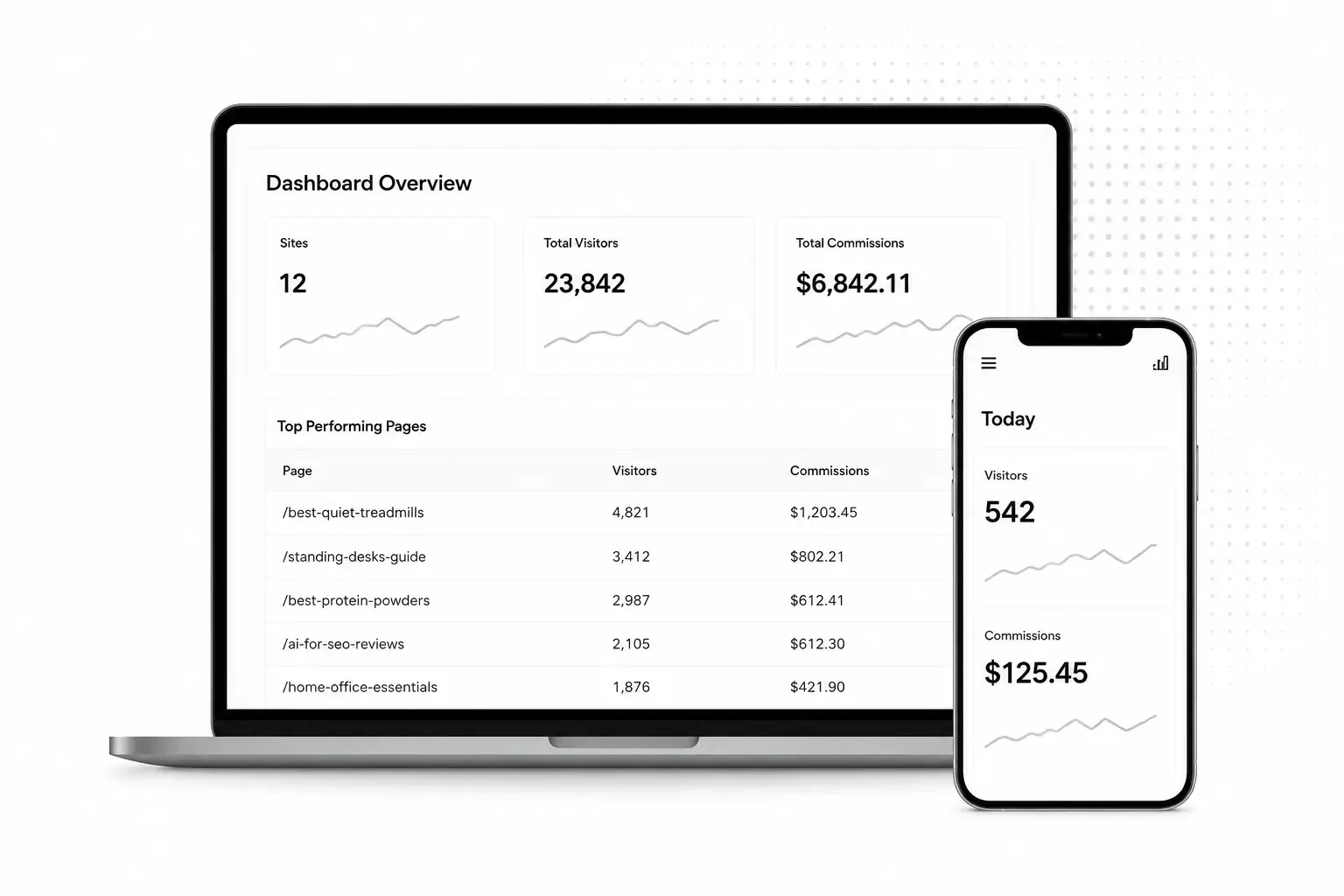
Once you have content live, the real work begins. Google Search Console is your first stop for understanding which queries bring traffic to your site. It shows you impressions, clicks, and average position for every keyword. If a page ranks on page two for a valuable term, you know exactly what to optimize. Maybe the title tag needs a stronger hook. Maybe the content is too thin and needs more detail. Maybe you forgot to include a comparison with a competing product.
Ahrefs and Semrush also offer site audit features that crawl your pages and flag technical issues like broken links, slow load times, or missing meta descriptions. Those technical problems can quietly kill your rankings, so it is worth running a quick audit every few months. I once had a site that dropped 40% of its traffic overnight. After a frantic investigation, I found that a plugin update had broken the XML sitemap. Fixing it restored the traffic within a week, but the lesson was clear: technical SEO is not optional.
Monetization Beyond Affiliate Links
While the Amazon Affiliate Program is the most well-known option, it is not the only one. ClickBank offers higher commissions on digital products and courses. Google AdSense can supplement your income with display ads, though it works best on sites with substantial traffic. Some niche sites also sell their own digital products or services, like ebooks or consulting calls. The key is to diversify your income streams without overwhelming your readers with ads.
I have seen sites that rely entirely on Amazon affiliate links and struggle when the commission rates change or when Amazon updates its cookie duration. A better approach is to build multiple revenue channels over time. For example, if you write about productivity tools, you can include Amazon links for planners and apps, run AdSense for general traffic, and promote a ClickBank course on time management. That kind of mix smooths out the income fluctuations that come with any single source.
Learn from the Community
No one succeeds in affiliate SEO alone. The community around this space is generous with knowledge. Sites like Authority Hacker, Niche Pursuits, and Passive Income Geek offer case studies, tutorials, and honest breakdowns of what works and what doesn't. Following people like Spen Ning, who shares detailed income reports and technical strategies, can save you months of trial and error. Pat Flynn's podcast still has episodes that are relevant years later because the fundamentals have not changed.
I also recommend joining at least one private community, like a Discord server or a paid membership group, where you can ask specific questions and get feedback. The public forums are great, but the signal-to-noise ratio can be tough. A focused group of people who are actively building sites will give you faster, more actionable advice.
The phrase "make money with affiliate SEO" gets thrown around a lot, but the reality is that it takes time. Most sites take six to twelve months to see meaningful traffic. The ones that succeed are built by people who treat it like a business, not a lottery. They track their metrics, refine their content, and keep learning. They also know when to walk away from a niche that is not working. I have killed more sites than I have kept. That is not a failure; it is part of the process.

If you are just starting out, pick one niche you actually care about. Build ten solid articles. Wait for traffic. Look at your data. Adjust. Then build ten more. Over time, you will figure out what works for your audience. The tools and platforms will change, but the core loop of research, content, and optimization will always be the path to make money with affiliate SEO. It is not a get-rich-quick scheme. It is a skill that compounds over time.
And that is the real secret. The people who make consistent passive income from affiliate sites are not geniuses. They are just the ones who kept going after the first site flopped. They learned to read Google Search Console reports, to use Ahrefs without getting overwhelmed, and to write content that actually helps someone make a decision. If you can do those things, you can make money with affiliate SEO too.